One of the most interesting topics raised in Chapter 5 was the discussion over Google’s personalization feature. Google’s currently functionality allows the search engine to retain information about an individual’s preferences. This can lead to different people retrieving different search results on the same keywords entered. While this personalization can be helpful in providing access to information that is more likely to be relevant to a user, critics argue that people do not have access to the broad scope of information available, only information that is likely to reinforce a certain viewpoint. I think this debate holds interesting implications for my work with students. As students become increasingly connected with the ability to build their web presence and profile at an earlier age, do personalized searches inhibit their ability to grow and become exposed to diverse information that challenge their word view? As a teacher, I would want students to be exposed to assorted resources that push them to confront and question their assumptions. One potential lesson I can see developing in my classroom to raise awareness of this issue is to have all of my students search the same keyword, take note of the differences in search results, and have a class discussion about why there is a difference in the results.
As someone who has relatively recently begun using Memo on
my Android phone to take notes and
 record random observations or thoughts, I
was excited to see the inclusion of electronic note-taking as a strategy to summarize
and recall information. Electronic
note-taking can hold particular promise for children with disabilities. A student with memory issues may be able to
quickly write and organize their thoughts on a portable device while a student
with dyslexia may be able dictate their thoughts and notes into their phone
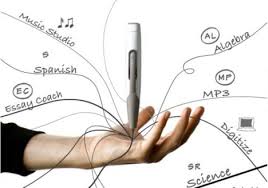
rather than spending the energy trying to find the right letters. There has also been a study (Belson &
Sherman, 2013) into the efficacy of digital smart pens in reducing the
cognitive load of students with language-based disabilities so they can better
focus on primary learning goals. Belson
and Sherman’s findings suggest that utilizing digital pens can improve the
quality of student notes and note-taking strategies.
record random observations or thoughts, I
was excited to see the inclusion of electronic note-taking as a strategy to summarize
and recall information. Electronic
note-taking can hold particular promise for children with disabilities. A student with memory issues may be able to
quickly write and organize their thoughts on a portable device while a student
with dyslexia may be able dictate their thoughts and notes into their phone
rather than spending the energy trying to find the right letters. There has also been a study (Belson &
Sherman, 2013) into the efficacy of digital smart pens in reducing the
cognitive load of students with language-based disabilities so they can better
focus on primary learning goals. Belson
and Sherman’s findings suggest that utilizing digital pens can improve the
quality of student notes and note-taking strategies.
I currently tutor a family of kids in the Bronx and one of
the first things they do when looking up definitions or information about a topic
is use Google. While this strategy works
well to start with, they invariably click on the first link that is pulled up
and try to use the information presented there as their main source. Needless to say, I found the section on helping
students evaluate online information particularly relevant. I agree with the authors when they say that
the teacher’s guidance in how to sift through information is especially
important in teaching children how to critically evaluate resources and information.

One of the most exciting aspects of learning that I am excited to share with my students is the world beyond the classroom. Whether it is learning about how different countries all view the issue of climate change or discovering what subjects are children in Sierra Leone learning today, technology has the potential to expand the world view of my students. I appreciated the inclusion of videoconferencing as a strategy to achieve this goal in Chapter 6. I plan on using videoconferencing to provide students with a window into the lives of others around the globe and an opportunity to create shared knowledge.
Questions:
1) What strategies would you use as a teacher to help students critically evaluate web information/resources?
2) What are some potential technologies that you think can benefit children with disabilities?
3) Do you believe that Google's personalized searches are a useful teaching tool?
References
Belson, S. I.,
Hartmann, D., & Sherman, J. (2013). Digital note taking: The use of
electronic pens with students with specific learning disabilities. Journal of Special Education Technology,
28(2), 13-25.
Maloy, R.,
Verock-O’Loughlin, R., Edwards, S., Woolf, B. (2014). Transforming learning
with new technologies. 2nd Ed. Pearson Publishing.
